
The Division of Neurorehabilitation offers consultations to people who are experiencing cognitive difficulties (such as memory or concentration problems), motor difficulties (such as movement problems) or mobility difficulties (such as difficulty moving around), to help them regain their independence and improve their quality of life.
Image
Image
Treatment of spasticity
The service provides specialized outpatient care for spasticity, based on dedicated medical expertise and a personalized approach. In addition to assessing the contributing factors, various treatments are offered, such as botulinum toxin injections, intrathecal baclofen and equipment.
- For intrathecal baclofen, the Division of Neurorehabilitation collaborates with the HUG Division of Neurosurgery.
- For the fitting, the service collaborates with outpatient orthotists.
- Botulinum toxin injections are offered at both sites of our service, ensuring better accessibility to care.
Paraplegology
A specialized medical-nursing consultation is dedicated to people with spinal cord and cauda equina injuries, and resulting in sensory and motor disorders up to complete paralysis.
Medical and nursing consultations dedicated to urinary disorders of neurological origin
Consultations include urodynamic and video-urodynamic assessments or flowmetry, with post-micturition residual urine measurement. An integrated approach to the management of neurological disorders is proposed. The Division of Neurorehabilitation collaborates with the HUG Division of Urology, particularly for the treatment of bladder dysfunction with botulinum toxin injections and for surgical treatments.
Medical and nursing consultations dedicated to people with multiple disabilities
The aim of these consultations is to carry out a functional assessment and establish priorities for rehabilitation, fitting of prosthetic devices, wheelchair installation, incontinence management, etc. This consultation works in collaboration with the HUG Disability Program, the Pediatric Orthopedics and Traumatology Unit and the Pediatric Urology Consultation, as part of the child-to-adult transition.
Physiotherapy
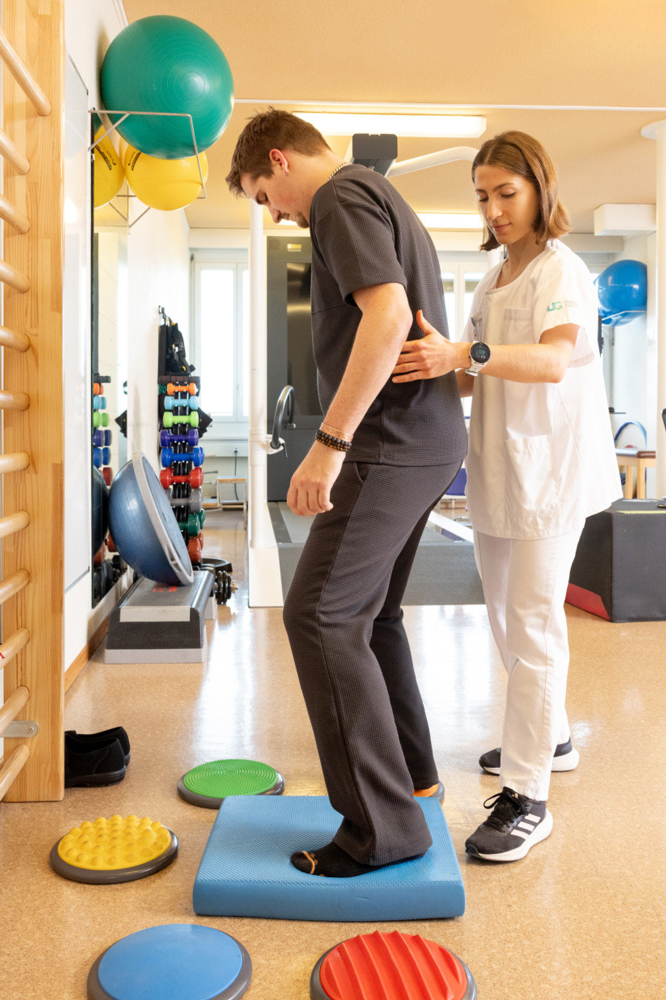
Physiotherapists are the experts in movement. They continually adjust the modalities and intensity of therapies to bring patients to their best level of walking and mobility.
The physiotherapists of the Division of Neurorehabilitation work closely with their colleagues in the Division of Neurology and the Department of Neurosurgery, from which most patients admitted for neurorehabilitation come, to ensure continuity of treatment started in the acute phase.
The proposed treatment methods are varied and include:
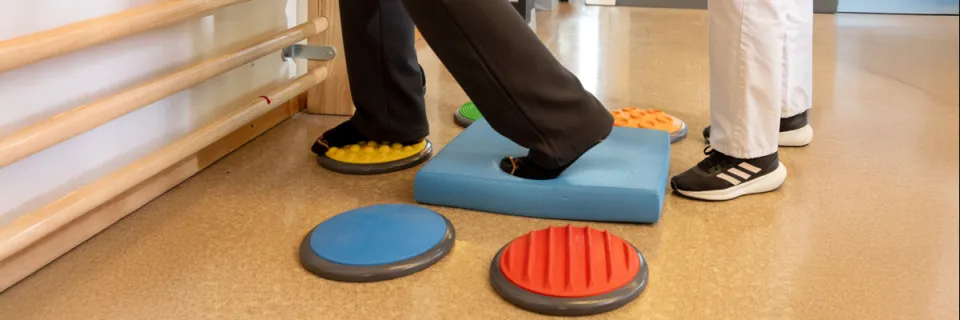
- individual or group treatment aimed at restoring or improving functional capacity, by working on mobility, strength, balance and endurance
- robot-assisted gait rehabilitation
- the treadmill and the work of walking on different surfaces
- treatment in a pool (water at 34°)
- fitness equipment training to work on strength and endurance
- climbing wall rehabilitation for some people
- a suitable physical activity.
At the end of the stay, the physiotherapists write a treatment report that will be attached to the patient’s medical file. At the patient’s request, this report can be sent to the independent physiotherapist who will continue the treatment.
Occupational Therapy
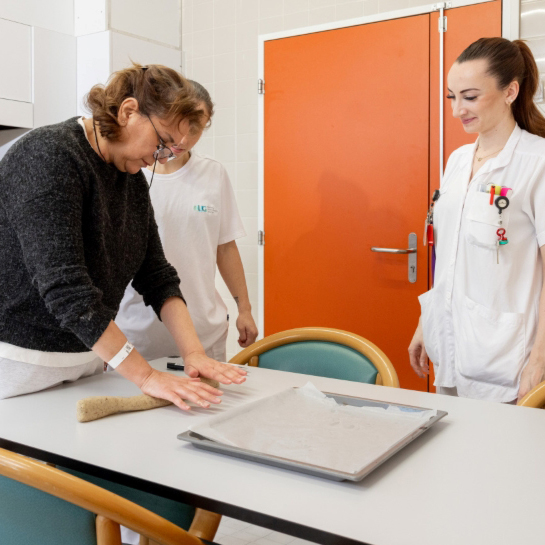
Occupational therapists are specialists in autonomy in daily life activities.
Their interventions range from work on the motor skills and sensitivity of the upper limbs to adaptation to the environment, advice on auxiliary aids and preparation for resuming professional activity.
Occupational therapists from the Division of Neurorehabilitation intervene in the following situations:
- work of installation and positioning in bed and in a chair
- motor and sensory training of the upper limbs through individual exercises, supplemented or intensified by the use of robotic machines
- assessment, re-education of independence and practical situations in daily life activities: washing, dressing, eating, shopping, cooking, going out, bus travel, etc.)
- environmental adaptation and advice on auxiliary aids (home, driving, etc.)
Occupational therapists write a treatment report that is attached to the medical file. At the patient’s request, this report can be sent to the independent occupational therapist who will continue the treatment.
Pre-professional Occupational Therapy
Pre-professional occupational therapists provide assessment and rehabilitation to facilitate return to work, or to assist in career re-direction if return to work is not possible.
Neuropsychology and speech therapy
Neuropsychologists and speech therapists are specialists in the assessment and treatment of cognitive function disorders.
Neuropsychologists address difficulties with various functions such as memory, attention, organization, perception, behavioral changes and fatigue that occur after a brain injury.
Speech therapists (or speech-language pathologists in France) deal with communication, language, voice and swallowing difficulties that occur after a brain injury.
Colonne 1
Image ou Video
Image
Image
Colonne 2
Image ou Video
Image
Image
What are the activities of neuropsychologists and speech therapists?
Neuropsychological and speech therapy assessments are used to evaluate cognitive and communication functions in order to provide information on independence in certain daily activities (managing administrative tasks, acquiring new skills, etc.), the possibility of returning to work, or even the ability to drive a vehicle.
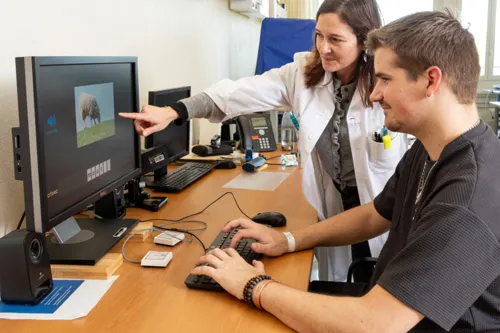
Neuropsychological and speech therapy rehabilitation programs are used to improve impaired functions by facilitating recovery and developing strategies to overcome difficulties. These programs may include individual care, computer-assisted training or group therapy. The team provides services for inpatients and outpatients, either as part of a simple outpatient follow-up or as part of the Day Hospital.
How to request an outpatient neuropsychological or speech-language therapy assessment or treatment?
An outpatient consultation or follow-up can be proposed directly by a physician from the Division of Neurorehabilitation, or by an external physician. Any external request must be examined by a physician from the Division of Neurorehabilitation, by making an appointment with the service’s secretary (see the contact section at the top of the page).
It is also possible to identify neuropsychologists and speech therapists in the city by referring to Psyfinder or the Romande Association of Diploma-Holding Speech Therapists.
What are the research activities of neuropsychologists and speech therapists?
The team of neuropsychologists and speech therapists actively participates in scientific research for a better understanding of cognitive processes and their management. For more information, visit the Research section.