
+ INFO
Residual pain after surgery is normal: the skin and muscles have been incised and retracted. The resulting postoperative swelling causes pain that will gradually subside.
From the end of your surgery until your return home, special attention is given to various factors that promote good recovery. Your participation is essential to ensure care tailored to your needs.
Pain and nausea control
It is important that you experience minimal pain and nausea after surgery so that you can :
- Move and get up easily
- Drink and eat
- Sleep better
- Recover more effectively
The care team regularly assesses your pain and adjusts your treatment in agreement with the unit’s physician. Postoperative nausea is managed with medication administered intravenously or orally. Please make sure you report any pain or nausea.
Swallowing difficulties
You may feel discomfort when drinking or eating in the hours following surgery, and in some cases a change in your voice. These effects may last between 24 and 72 hours. If you notice these symptoms, inform the care team.
Nutrition
You will resume your usual diet as soon as possible.
Early and Appropriate Mobilization
Staying in bed after surgery can lead to complications such as lung inflammation, venous thrombosis, muscle weakness, etc.
A physiotherapist will visit you the afternoon of the surgery or the next day at the latest to :
- Re-explain posture and movement guidelines
- Teach you mobility exercises
- Assess your walking ability
- Help you go take the stairs and pick up objects from the floor
- Explain mobility exercises and activities you can perform during the six weeks after surgery
- Answer your questions
When brushing your teeth, it is important to use a cup to maintain proper neck posture.
TIP
Bring shoes that fit well and are easy to put on to help with walking again.
First Time Getting Up
About six hours after surgery, a physiotherapist will help you sit on the edge of the bed as described below and then accompany you in a wheelchair to the sink for washing.
If the surgery was on the cervical spine
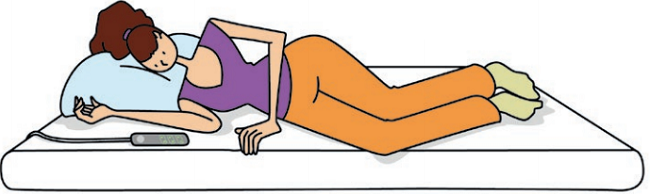
Turn onto your side in one movement, keeping your head, shoulders, and hips aligned.
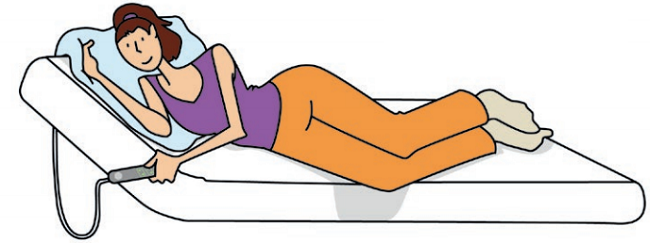
Raise the head of the bed as much as possible.
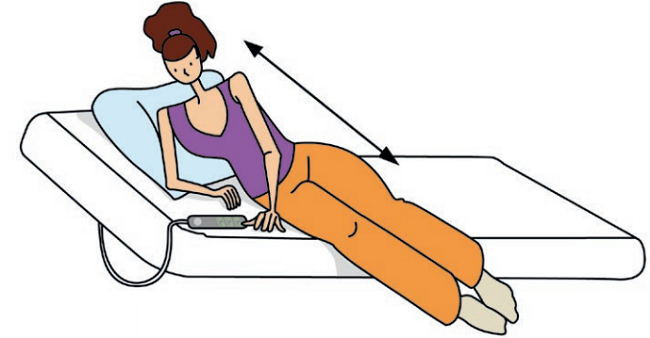
Lower your legs and push with your arms to sit up.
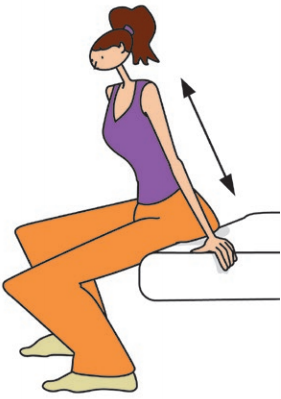
Keep your back straight when standing up.
If the surgery was on the lumbar spine
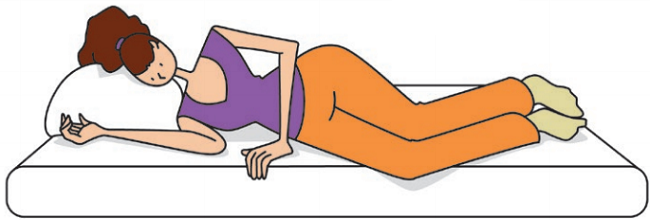
Turn onto your side in one movement, keeping your head, shoulders, and hips aligned.
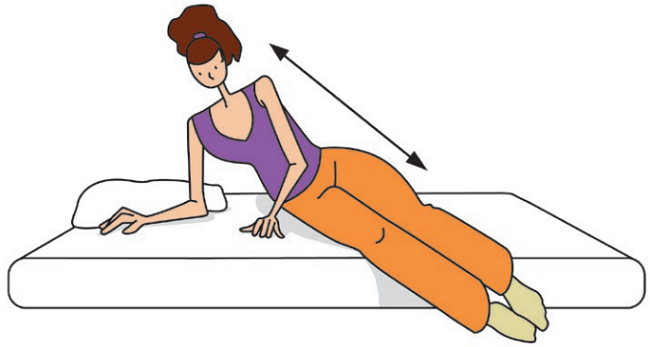
Keep your back straight, lower your legs, and push with your arms to sit up.
Keep your back straight when standing up.
Initial Exercises
The physiotherapist will assist you in going up and down stairs. Together, you will also perform the first set of exercises described below.
Core strengthening exercises after lumbar surgery
The following movements will strengthen your posterior back and abdominal muscles.
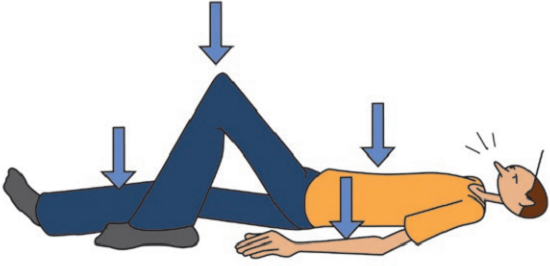
Press down on the bed with your head, both arms, your left foot, and your right leg extended while exhaling, then release the effort while inhaling. Repeat the same exercise pressing with your right foot and left leg extended. If possible, repeat the exercise twice a day, in sets of 10 on each side.
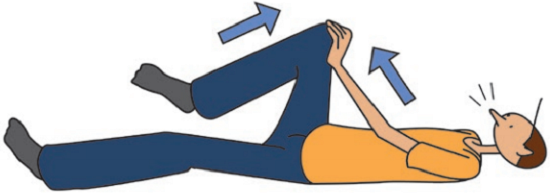
Push with your left hand against your right knee while exhaling, then release the effort while inhaling. Repeat the same exercise with the other leg. If possible, repeat the exercise twice a day, in sets of 10 on each side.
As soon as possible, the physiotherapist will assist you in taking the stairs.
Radiographic Control
Radiological examinations of the spine are performed during (CT scan) or after surgery (CT scan or X-ray) to verify the correct positioning of the implanted hardware.
Showering
You may take a shower starting the day after your surgery, following the care team's instructions. If needed, they will assist you with hygiene for your back.