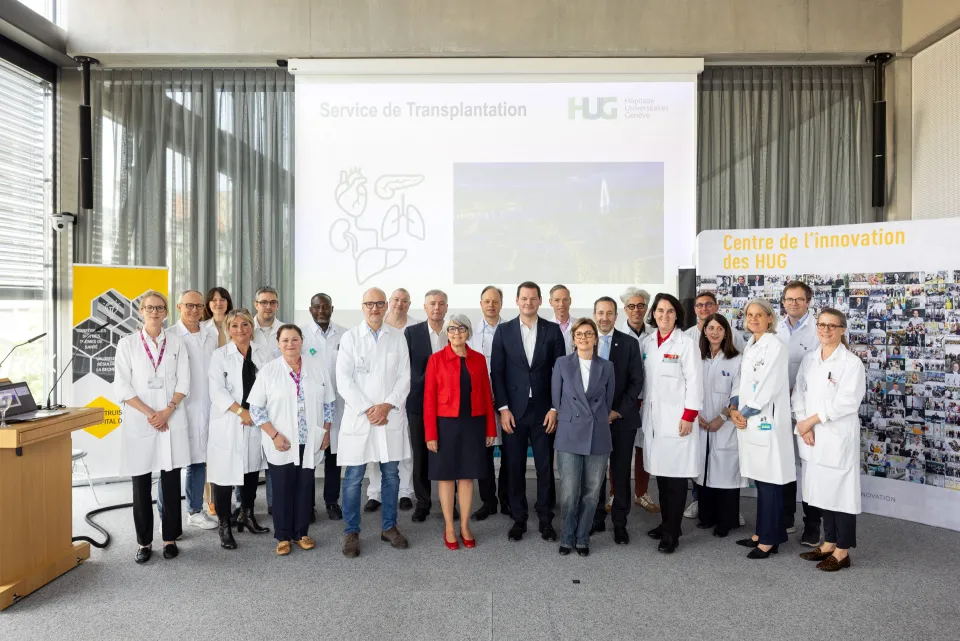
Federal Councillor Elisabeth Baume-Schneider visits the HUG

Visita della consigliera federale Elisabeth Baume-Schneider agli HUG

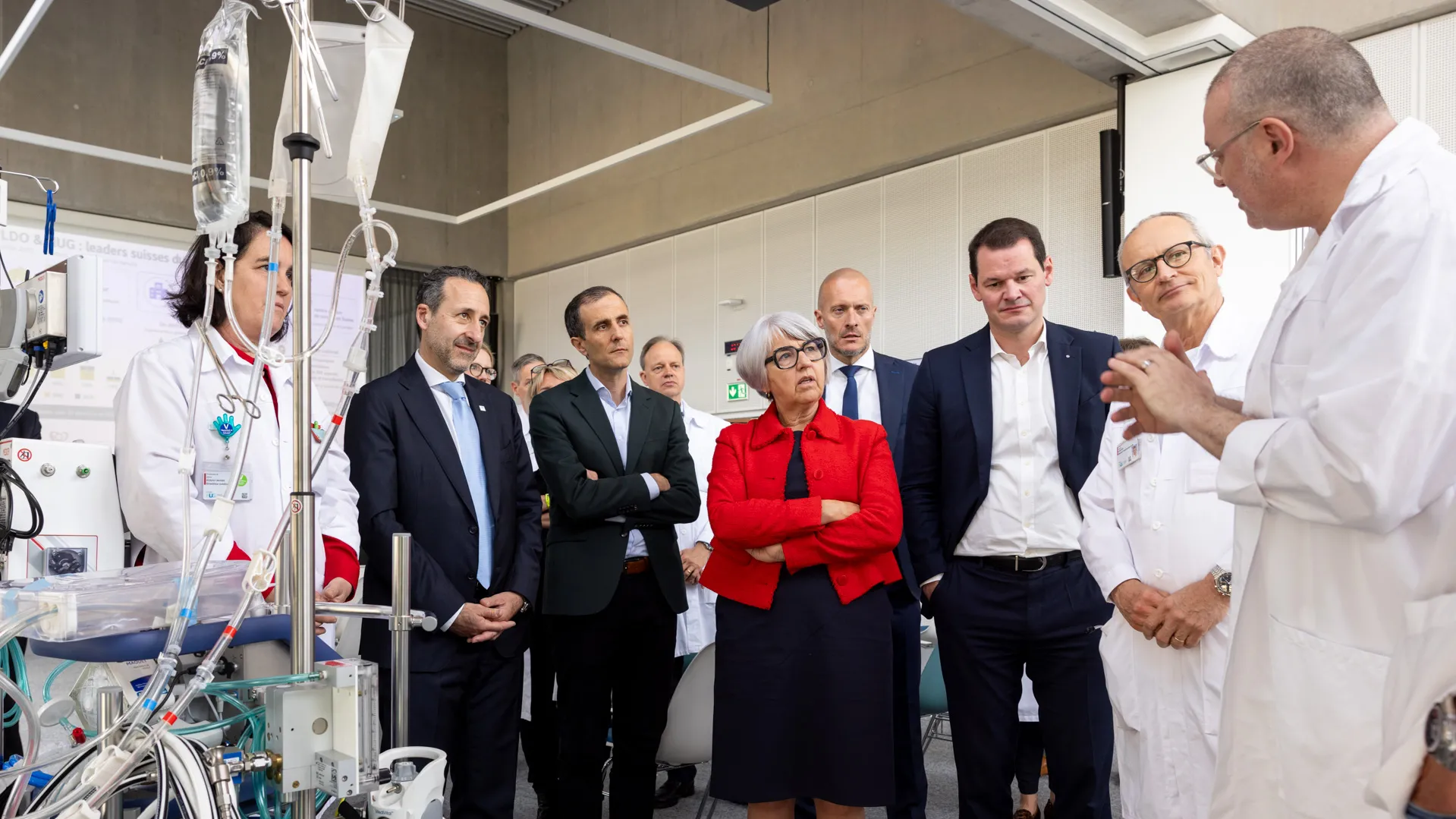
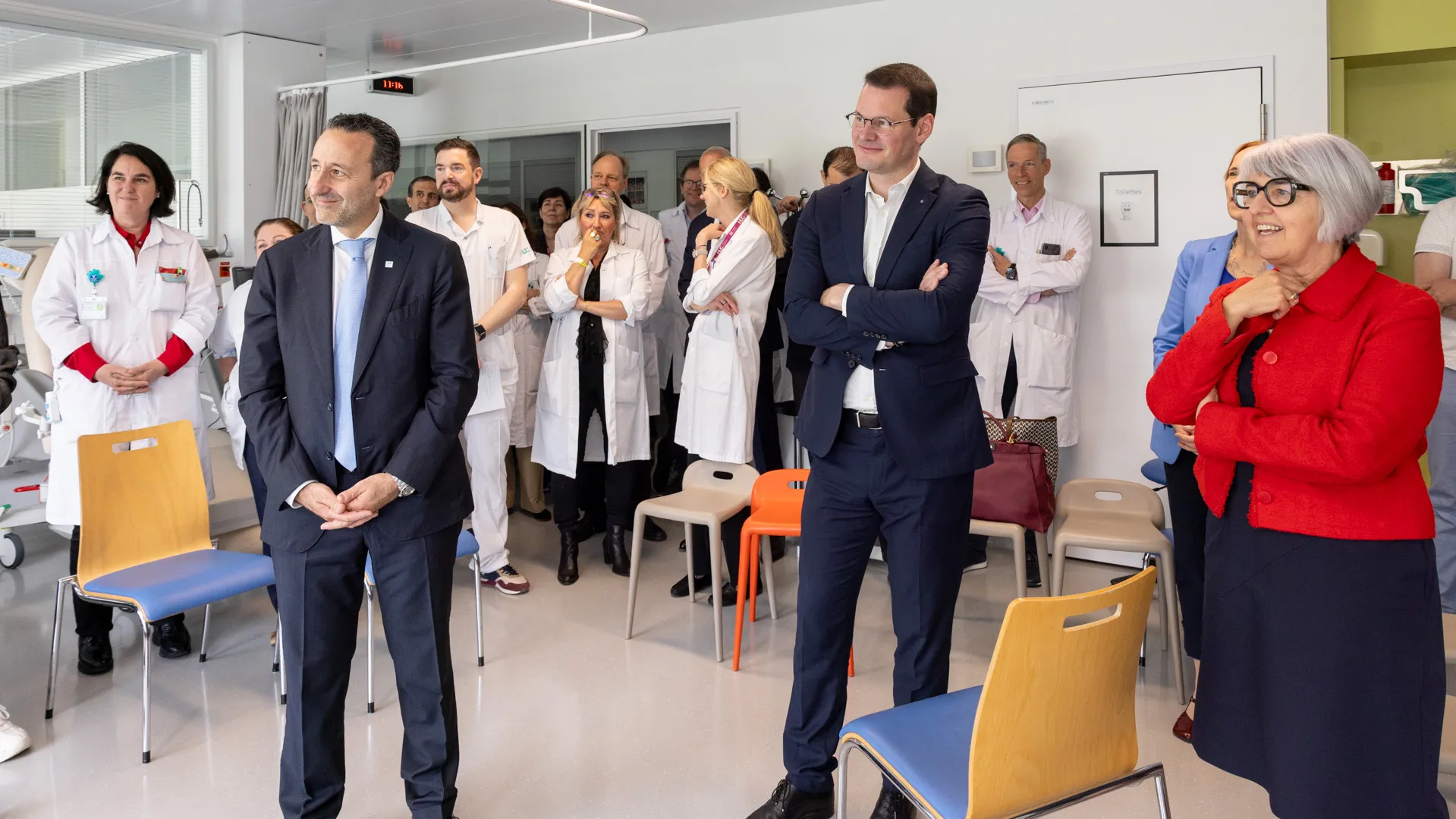
On the sidelines of the 79th World Health Organization (WHO) General Assembly, Federal Councillor Elisabeth Baume-Schneider, Head of the Federal Department of Home Affairs (FDHA) and responsible for health, took the opportunity during her stay in Geneva to visit the HUG. The visit provided an opportunity to meet the teams of the Transplantation Department as well as patients.

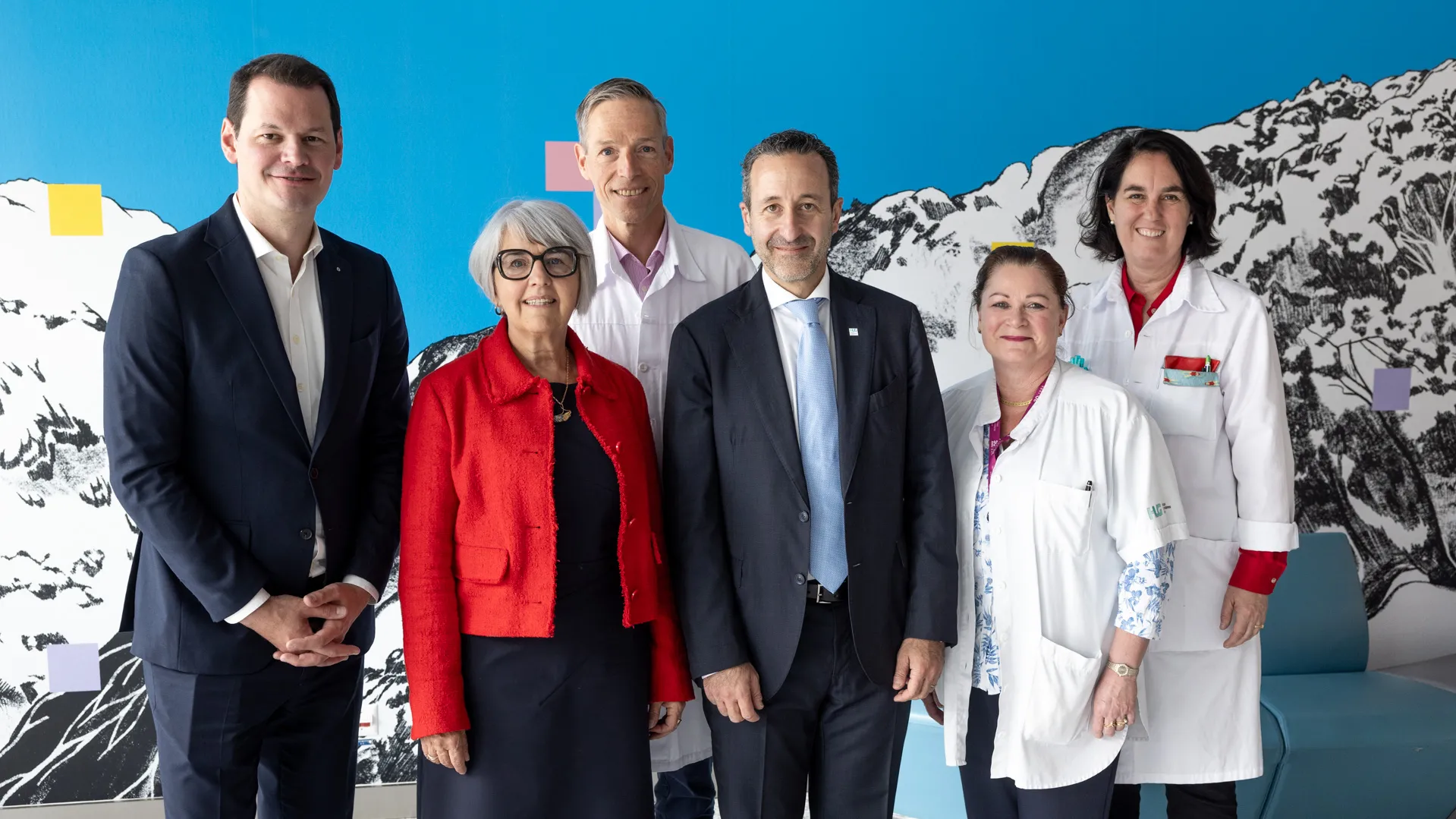
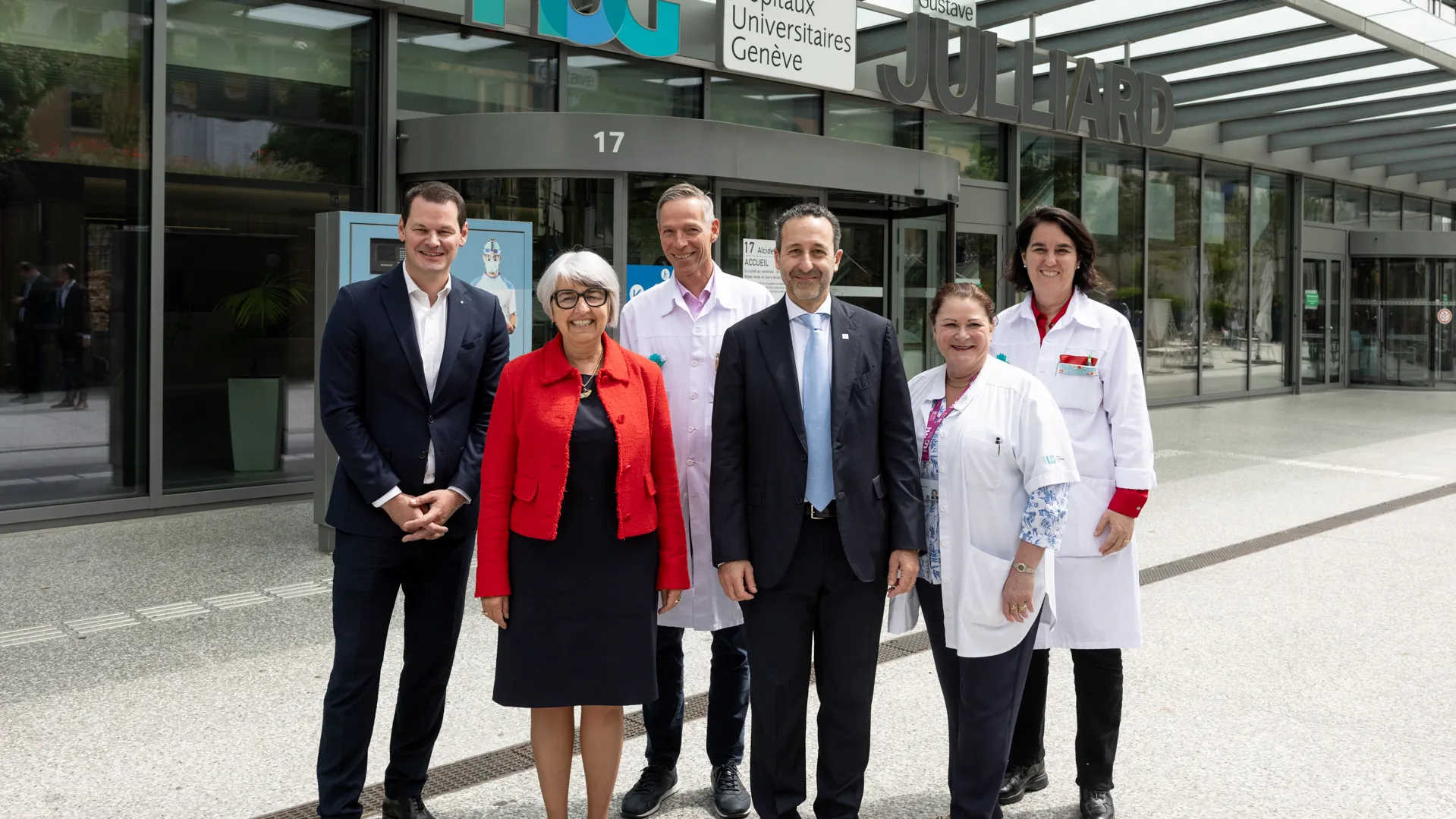
“With these words, ‘You can be proud of the HUG,’” the Head of the FDHA praised the commitment and excellence of the transplantation teams. Accompanied by State Councillor Pierre Maudet, Head of the Department of Health and Mobility, she was welcomed by Robert Mardini, Director General of the HUG, Prof. Klara Posfay Barbe, Medical Director, Sandra Merkli, Director of Nursing, and Gaëtan Tiger, Director of Projects and Processes. The Federal Councillor, who proved highly approachable and curious, then spoke with healthcare professionals and visited the units of the Transplantation Department to meet those who work there on a daily basis.
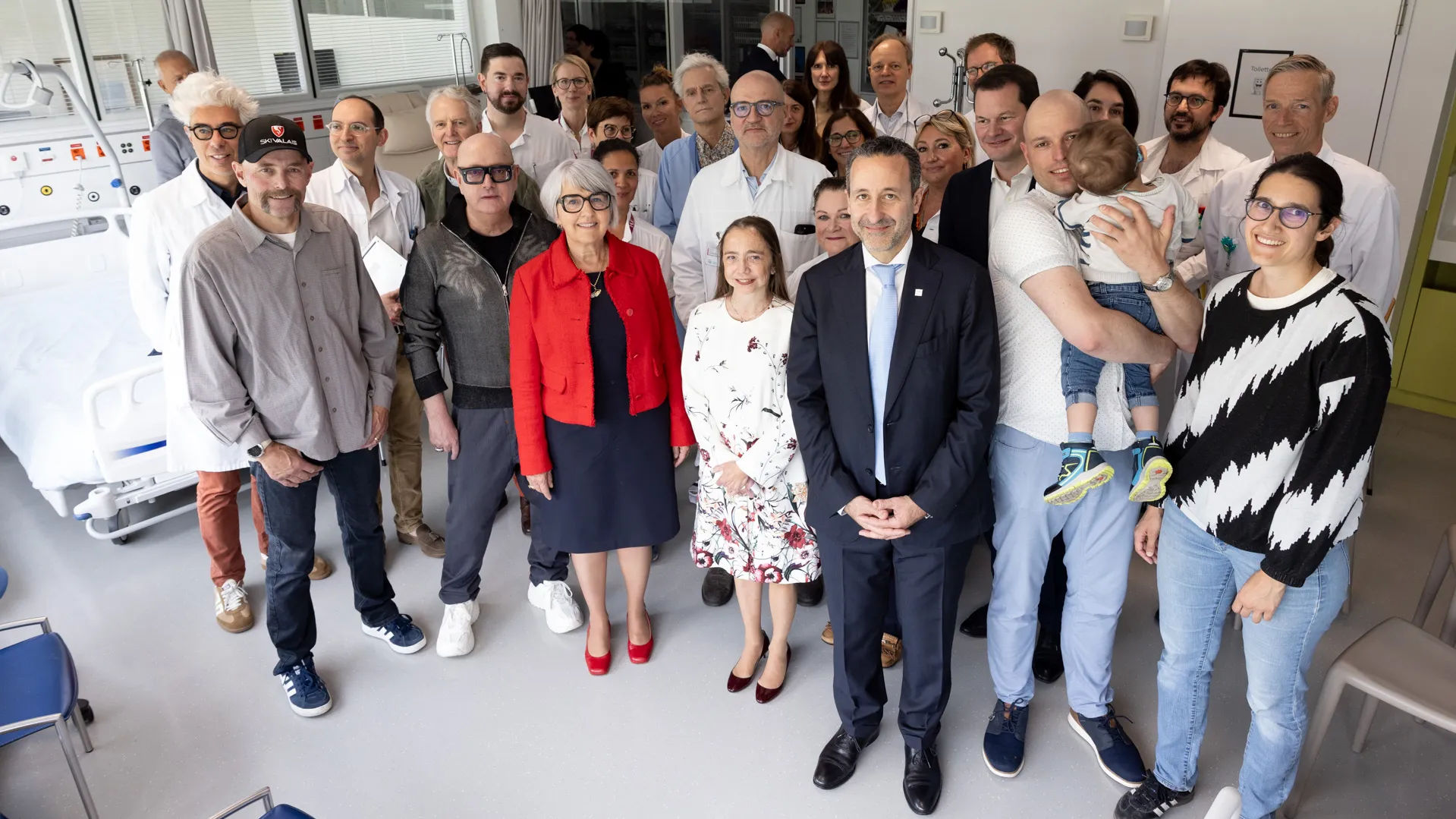
 

A human encounter at the heart of care

The visit took on its full meaning during discussions with transplant recipients. Among them was actor Joseph Gorgoni, also known as Marie-Thérèse Porchet, who underwent a double lung transplant after fibrosis, Covid-19, 42 days in a coma, and a severe fungal infection. He praised the work of the teams, as did former Swiss ski champion William Besse, an iconic downhill skier of the 1990s. Suffering from a severe autoimmune disease, he successfully underwent a liver transplant at the HUG and expressed his gratitude to both his donor and the hospital teams. Finally, the presence of Raphaël, a young liver transplant patient, served as a reminder that the HUG are Switzerland’s only centre for paediatric liver transplantation (Swiss Pediatric Liver Center), a national responsibility carried out with some of the best outcomes in Europe since the first transplant performed in 1987.
 

A field of medicine involving the entire institution

The delegation also met transplantation coordinators Sofia Bosch and Marie-Claude Kempf, indispensable links between the medical teams and patients. They explain, reassure and support patients at every stage of a long and demanding journey, and shared the emotional dimension of their role. Their human presence lies at the heart of a highly technical field of medicine where interpersonal skills, listening and availability are essential.

At the HUG, transplantation is not the responsibility of a single department: it mobilises the institution as a whole. It relies on close collaboration between the Department of Surgery, the Department of Medicine, and the Department of Women, Children and Adolescents. Surgeons, internists, infectious disease specialists, nephrologists, hepatologists, pulmonologists, anaesthesiologists, intensive care specialists, paediatricians, psychiatrists and nursing staff work together, from the assessment of transplant candidates to the long-term follow-up of transplant recipients. This interdisciplinary approach, rare on such a scale, is one of the major strengths of the Geneva model and guarantees comprehensive, coherent and continuous care.

Organ shortage: a collective and urgent challenge

Behind every successful transplant lies a complex reality: the chronic shortage of available organs. In 2025, the HUG performed 104 transplants, including 47 liver transplants. These figures reflect a sustained level of activity, but they also highlight the extent of unmet needs. In Switzerland, several hundred people are waiting for a transplant at any given time, and around 60 to 80 of them will unfortunately not receive one in time each year.

From a legislative perspective, the Swiss population approved in May 2022 the principle of presumed consent in its broad form: anyone who does not wish to donate their organs will in future need to record this decision explicitly. However, this major change is not expected to come into force before the third quarter of 2027. The HUG estimate that this new law could increase organ donation rates by 10% to 15%.

A reference department at regional and national level

Led by Prof. Philippe Compagnon, the HUG Transplantation Department provides assessment, treatment and medico-surgical follow-up for patients receiving solid organ transplants: liver, kidney, pancreas, islets of Langerhans, small intestine and multivisceral transplants. Within the Western Swiss University Centre for Transplantation, the HUG and the CHUV share specialties according to anatomical logic: Lausanne for thoracic organs (heart and lungs), Geneva for abdominal organs. In addition, the HUG hold a leading position in islet of Langerhans transplantation, an alternative to whole pancreas transplantation for the treatment of type 1 diabetes. This leadership is based on the work of the Islet Isolation and Transplantation Laboratory (LITC), headed by Prof. Ekaterina Berishvili and ranked as the third most active centre worldwide.

“This visit illustrates what makes the HUG strong: teams entirely dedicated to their patients, with a level of excellence and humanity that commands admiration,” said Robert Mardini. The visit of Federal Councillor Elisabeth Baume-Schneider, together with State Councillor Pierre Maudet, confirms what the figures already demonstrate: at the HUG, transplantation saves lives and paves new paths for the medicine of tomorrow. Elisabeth Baume-Schneider also emphasised during the visit: “You can see here that lives are being saved,” thanking staff members for their commitment to patients.

Last update : 21/05/2026